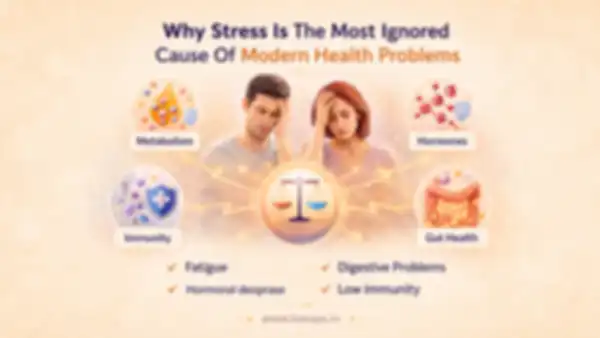
Why Stress Is The Most Ignored Cause Of Modern Health Problems
Stress is often treated as a mental or emotional issue.
In reality, chronic stress is a powerful biological disruptor that silently affects metabolism, hormones, immunity, digestion, and long-term health.
Many modern health problems do not begin with disease — they begin with prolonged, unrelieved stress.
Stress Is A Biological State, Not Just A Feeling
Stress is not limited to emotional pressure.
The body experiences stress when it is exposed to:
Poor sleep
Irregular eating patterns
Overworking without recovery
Chronic inflammation
Nutrient deficiencies
Mental and emotional overload
When stress becomes constant, the body shifts into survival mode.
Cortisol: The Central Stress Hormone
Cortisol is the primary hormone released during stress.
In short bursts, cortisol is protective.
When stress is chronic, cortisol remains elevated for long periods.
Persistently high cortisol:
Disrupts insulin sensitivity
Suppresses thyroid function
Alters sex hormone balance
Promotes fat storage
Weakens immune regulation
This makes cortisol a master regulator of metabolic health.
How Stress Disrupts Metabolism
Under chronic stress, the body prioritizes survival over balance.
As a result:
Blood sugar regulation becomes unstable
Insulin resistance increases
Fat burning slows
Energy production becomes inefficient
This explains why stress often leads to fatigue, weight changes, and metabolic slowdown — even without dietary excess.
Stress And Hormonal Imbalance
Stress hormones directly interfere with other hormonal systems.
Chronic stress can:
Reduce thyroid hormone activity
Disrupt estrogen–progesterone balance
Lower testosterone signaling
Disturb appetite and sleep rhythms
Hormonal imbalance caused by stress often appears before lab values change.
Stress Weakens Immune Balance
The immune system is highly sensitive to stress signals.
Prolonged stress:
Increases low-grade inflammation
Reduces immune resilience
Impairs recovery and repair
This makes the body more vulnerable to recurring infections, slow healing, and chronic inflammatory conditions.
The Gut–Stress Connection
Stress directly affects gut function.
Under stress:
Digestive enzyme release reduces
Gut barrier integrity weakens
Inflammatory signals increase
This creates a loop where gut imbalance increases stress signaling, and stress further damages gut health.
Why Stress-Related Damage Is Often Missed
Stress-driven dysfunction develops gradually.
In early stages:
Reports appear normal
Symptoms are vague
Damage is functional, not structural
This is why stress is often overlooked as a root cause until multiple systems are affected.
Common Signs Of Chronic Stress Overload
These may include:
Persistent fatigue
Brain fog
Poor sleep quality
Mood fluctuations
Weight changes
Digestive discomfort
Frequent illness
These symptoms are not separate problems — they are connected stress signals.
Reducing Stress Is A Metabolic Necessity
Managing stress is not optional for health.
Reducing chronic stress helps:
Restore insulin sensitivity
Improve hormonal coordination
Reduce inflammation
Support immune balance
Improve energy and recovery
True health restoration requires addressing stress at the biological level, not just mentally.
Frequently Asked Questions
Can stress cause metabolic problems even with good diet?
Yes. Stress can override dietary efforts by disrupting hormonal signaling.
Is stress only psychological?
No. It is a full-body physiological response.
Can stress effects be reversed?
Yes. Early correction restores balance more effectively.
Conclusion
Stress is not just an emotional burden — it is a biological force that reshapes metabolism, hormones, immunity, and gut health.
Ignoring stress means ignoring one of the most powerful drivers of modern health problems.
Restoring balance begins with recognizing stress as a core metabolic factor, not a secondary issue.

LOMAYA
Lomaya offers trusted vitamins and hair regrowth treatments to support your wellness and confidence from within.


Call: +91 - 8238832811
WhatsApp: +91 - 8238832811
Customer Support Time: 24/7
Email: lomayainfo@gmail.com
Address: 3, Shiv krupa Industrial Estate, Near Icon Industrial Park, , Gujarat, Ahmedabad, 382410